
February is a revealing month for the Worcestershire garden. As the lush distractions of summer remain dormant, the structural bones of our outdoor spaces are laid bare. For many residents, particularly those in the county’s recent new-build developments or the more compact Victorian townhouses of Worcester and Droitwich, this is the time of year when a lack of privacy becomes most apparent.
As a garden designer, I view privacy not as a matter of fortification, but as a challenge in spatial problem-solving. While the immediate impulse is often to plant a dense, fast-growing hedge, there are far more sophisticated ways to reclaim your sanctuary without compromising on light, wildlife friendliness, or aesthetic value.
The Problem with the "Quick Fix"
The much-maligned Leylandii hedge is usually the result of a reactive decision. It provides a dense evergreen wall, certainly, but it also creates a heavy, oppressive boundary that can shrink a garden and lead to disputes over light. In a professional design context, we look to "screen" rather than "block," using materials and textures that feel like an intentional part of the architecture.
Elevated Privacy: Pleached Trees
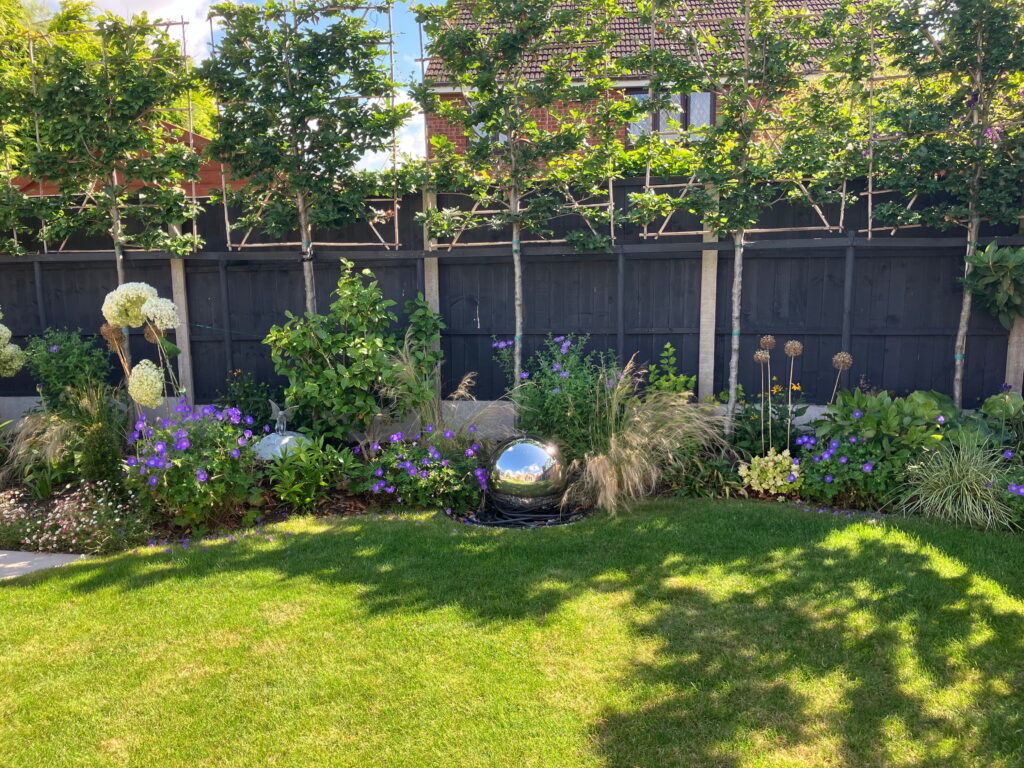
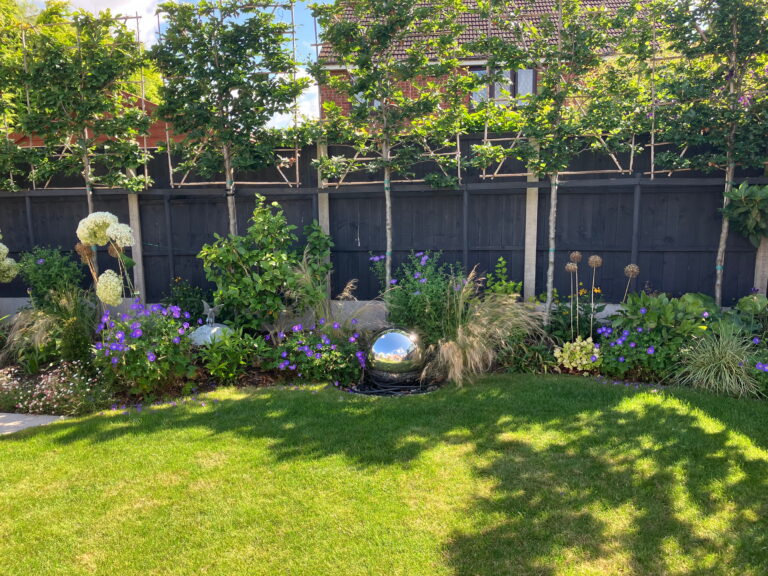
For properties overlooked by two-storey neighbours, a standard six-foot fence is rarely sufficient. The most elegant solution is often the use of pleached trees, frequently referred to as "hedges on stilts."
By selecting trees such as Hornbeam (Carpinus betulus) or Liquidambar, we can achieve privacy at the exact height required - above the fence line - while leaving the ground level clear for decorative planting. This maintains the footprint of the garden while effectively "raising" the boundary to shield upstairs windows without boxing in the lower patio.
Zoning and Strategic Internal Screening
Privacy does not always have to happen at the perimeter. Often, the most effective way to deal with an "awkward" overlook is to create a secluded zone within the garden itself.
- Trellis Work and Slatted Battening: Contemporary cedar or larch battening can create a semi-permeable screen. This filters the view and the wind, providing a sense of enclosure for a seating area without creating a solid, dark barrier.
- Strategic Levels: In sloping gardens, such as those found across the Malvern foothills, we can use terracing to our advantage. Sinking a seating area slightly or using raised masonry planters can reposition your line of sight, making a neighbouring property feel significantly more distant.
- Perpendicular Planting: Sometimes, a single, well-placed multi-stem tree, like a Betula utilis 'Jacquemontii', positioned halfway between your terrace and the boundary, is more effective than a dozen trees planted in a row.
Solving the "Awkward" through Design
The primary role of a designer is to mitigate the inherent flaws of a site. Whether it is a triangular plot that tapers to a point or a garden that feels like a goldfish bowl, these challenges dictate the creative direction. We look for the "long view" and the "tight angle," ensuring that when you are sitting with a coffee on a February morning, your focus is on the texture of a bark or the silhouette of a grass, rather than the house next door.
If your garden feels exposed this winter, view it as an opportunity to add structural interest that will serve you for decades, rather than just a quick green screen.
Need some help to avoid the dreaded Leylandii? Pop me a message; I’d love to guide you.